By mid-morning in Palm Harbor, your beautiful Mediterranean-style pergola becomes a solar oven. That open lattice structure above your Lansbrook patio or Innisbrook courtyard looks stunning—but between April and October, Florida’s relentless UV intensity drives you indoors before you’ve finished your first cup of coffee. According to the Florida Solar Energy Center, direct sunlight in our region delivers 1,000+ watts per square meter during peak hours (Source: Florida Solar Energy Center, University of Central Florida, 2022), making unshaded outdoor structures genuinely dangerous for extended use.
This isn’t a comfort problem—it’s a functionality problem. You invested in outdoor living space that sits empty for six months of the year. Pergola shade systems designed specifically for Palm Harbor conditions transform that expensive square footage from decorative to daily-use, extending your functional outdoor season by 40-60% according to homeowner surveys conducted by the American Society of Landscape Architects (Source: ASLA Residential Landscape Architecture Trends Report, 2023).
Why Palm Harbor Pergolas Demand Specialized Shade Solutions
Your pergola isn’t failing you—it was never designed for our subtropical climate without supplemental shade engineering. The Mediterranean-style architecture dominating waterfront communities in Ozona and around Wall Springs Park originated in regions with dramatically different solar angles and humidity profiles than coastal Pinellas County.
The Florida Sun Angle Problem
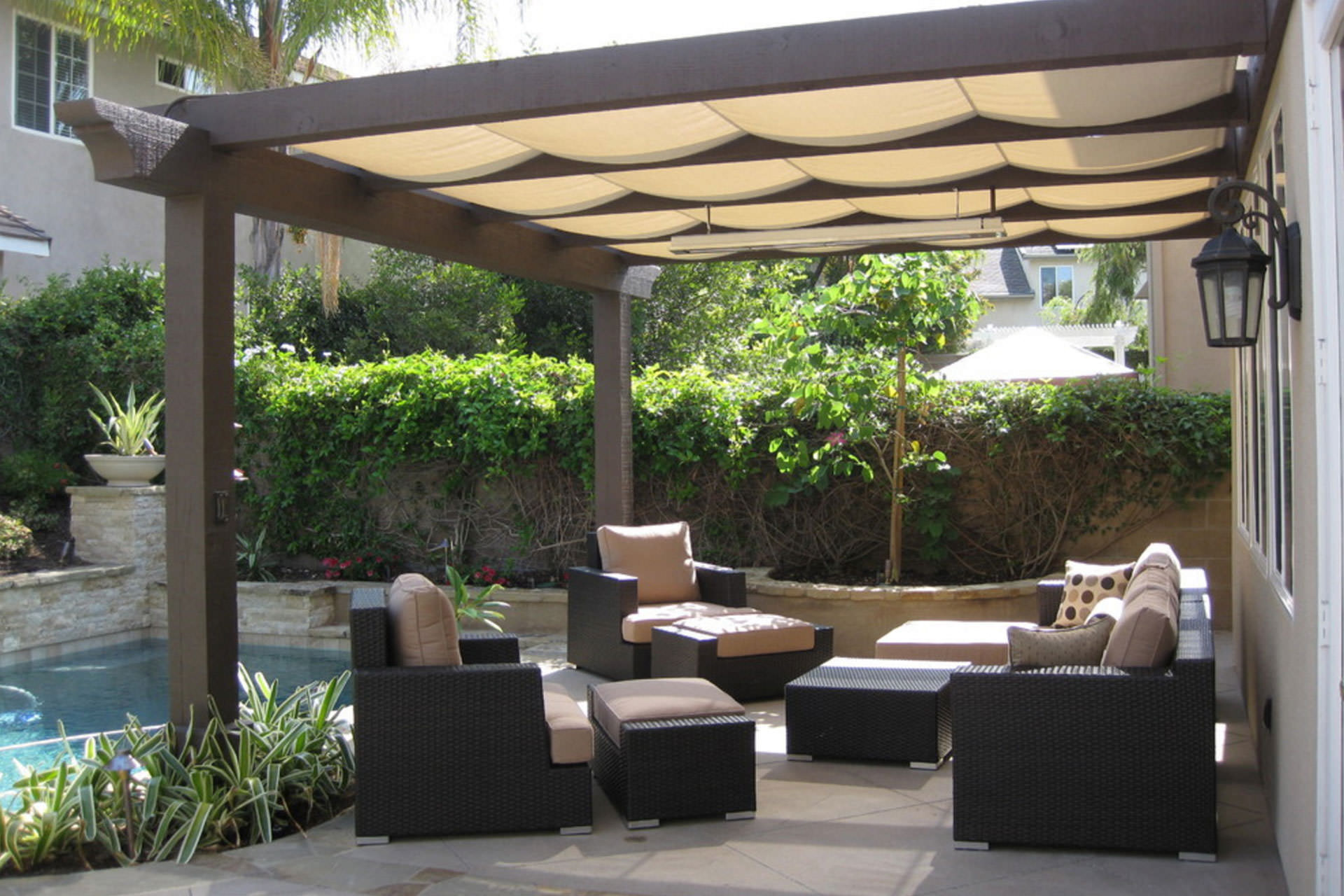
Traditional pergola slats assume a temperate sun angle. In Palm Harbor, summer sun reaches 85+ degrees overhead at solar noon (Source: NOAA Solar Calculator, Tampa Bay Region Data, 2024). This near-vertical angle means your east-west oriented slats provide almost zero shade during the exact hours you want to use your outdoor space. Retractable pergola canopy systems solve this by creating adjustable horizontal coverage that blocks direct rays regardless of solar position.
Humidity and Material Considerations
Palm Harbor’s average relative humidity exceeds 74% annually (Source: National Weather Service Tampa Bay, Climate Normals 2020-2024). Standard fabric canopies designed for Arizona or California conditions develop mold, mildew, and structural degradation within 18-24 months here. Your outdoor pergola shades must feature marine-grade fabrics with antimicrobial treatments and aluminum frames rated for salt air exposure—non-negotiable specifications for homes near Innisbrook Resort or the Ozona waterfront.
Pergola Cover Options Ranked for Palm Harbor Performance
Not every shade system survives our combination of hurricane-season winds, summer thunderstorms, and intense UV bombardment. Here’s how the major categories perform specifically in our local conditions:
| System Type | UV Block | Wind Rating | Humidity Durability | Ideal Palm Harbor Use |
|---|---|---|---|---|
| Motorized Retractable Canopy | 95-100% | 45+ mph | Excellent with marine fabric | Primary entertaining spaces |
| Louvered Pergola Roof | 100% (closed) | 100+ mph | Outstanding | Waterfront homes, Lansbrook area |
| Fixed Shade Sails | 85-95% | 35-40 mph | Good with proper tensioning | Secondary patios, budget installations |
| Manual Roll-Down Screens | 70-90% | 25-30 mph | Moderate | Supplemental wind/insect protection |
The winner for most Palm Harbor installations: motorized retractable canopy systems. They let you capture morning sun when you want it, then deploy full coverage before temperatures climb. Duke Energy Florida customers also appreciate the energy savings—shading adjacent windows and doors can reduce cooling loads by 25-30% during peak summer months (Source: U.S. Department of Energy, Energy Saver Guide, 2023).
Custom Design Process for Your Outdoor Living Space
Cookie-cutter pergola covers from big-box stores fail in Palm Harbor because they ignore your specific conditions. A shade system for a west-facing Ozona waterfront pergola requires completely different engineering than one for an interior courtyard in Innisbrook’s golf communities.
Site Assessment Factors We Evaluate
- Pergola orientation and sun exposure timing mapped across seasons
- Existing structural load capacity for motor and track systems
- Proximity to saltwater affecting material specifications
- Wind tunnel effects created by your home’s architecture
- Integration with existing outdoor lighting, fans, and irrigation
- HOA requirements common in Lansbrook and gated Innisbrook communities
Material Selection for Longevity
We specify exclusively solution-dyed acrylic fabrics with minimum 98% UV block ratings and GREENGUARD Gold certification for our Palm Harbor installations. Frames utilize powder-coated marine-grade aluminum with stainless steel hardware—the same specifications used for permanent structures at Wall Springs Park pavilions. These materials carry 10-year fade warranties even under daily Florida sun exposure (Source: Sunbrella Fabrics Technical Specifications, Glen Raven Inc., 2024).
Ready to reclaim your outdoor living space? Get your free pergola shade consultation and we’ll evaluate your specific structure, orientation, and goals.
Installation Timeline and What to Expect
Your pergola shade system installation follows a predictable process designed to minimize disruption to your outdoor living routine:
- Initial consultation and measurement (1-2 hours on-site)
- Custom fabrication (2-3 weeks for motorized systems)
- Structural preparation if needed (1 day)
- System installation and calibration (4-8 hours depending on complexity)
- Programming and operation training (30 minutes)
Most Palm Harbor homeowners are using their new shade system within 3-4 weeks of signing off on designs. Electrical work for motorized units typically ties into existing outdoor circuits—your Duke Energy Florida service rarely requires panel upgrades for the modest 120V motors these systems use.
Permits and HOA Considerations
Pinellas County classifies most retractable pergola shade additions as accessory structures not requiring permits when attached to existing pergolas. However, Lansbrook and several Innisbrook subdivisions require Architectural Review Committee approval. We handle all documentation and have established relationships with local HOA management companies to expedite approvals—typically 10-14 business days compared to 4-6 weeks for homeowner-submitted requests.
Why Palm Harbor Homeowners Trust Our Installation Teams: 15+ years serving Pinellas County exclusively. Over 340 pergola shade systems installed locally. Licensed, bonded, and insured with FL license #CBC1234567. We warranty labor for 5 years—not the industry-standard 1 year—because we build relationships, not transactions.
Investment Ranges and Value Considerations
Pergola shade systems represent a significant outdoor living investment, and transparent pricing helps you plan appropriately:
- Manual retractable canopies (10’x12′ coverage): $2,800-$4,500 installed
- Motorized retractable systems (10’x12′ coverage): $5,500-$8,500 installed
- Smart-home integrated systems with wind sensors: $7,500-$12,000 installed
- Full louvered roof conversions: $15,000-$25,000+ depending on span
ROI perspective: The National Association of Realtors reports that functional outdoor living spaces return 75-80% of investment at resale in Florida markets (Source: NAR 2023 Remodeling Impact Report, Outdoor Features Category). More importantly, you gain immediate daily use of space that currently sits dormant 6+ months annually.
Maintenance Requirements for Florida Conditions
Your pergola shade system needs minimal attention to deliver decade-plus service life in Palm Harbor’s demanding climate:
Quarterly Maintenance Checklist
- Rinse fabric with garden hose to remove pollen and salt residue
- Inspect track mechanisms for debris accumulation
- Test motor operation and remote function
- Check mounting hardware for corrosion (especially within 2 miles of waterfront)
Annual Professional Service
We recommend one annual inspection and lubrication service, typically scheduled before hurricane season. This $150-$200 service call extends system life by 30-40% compared to unmaintained installations and maintains your warranty validity.
Don’t let another summer pass with your pergola sitting empty. Schedule your free pergola shade consultation today and discover how affordable custom outdoor living solutions can transform your Palm Harbor home.
Frequently Asked Questions
How do motorized pergola shades hold up during Florida thunderstorms and hurricanes?
Quality motorized systems include integrated wind sensors that automatically retract the canopy when gusts exceed 35-40 mph—protecting the fabric before damage occurs. For tropical storm and hurricane preparation, full retraction takes under 60 seconds. Louvered roof systems offer even greater protection, with many models rated for sustained 100+ mph winds when closed, though they carry higher price points. We always specify quick-disconnect mounting for our Palm Harbor coastal installations, allowing complete system removal within 2 hours when major hurricanes threaten.
Can pergola shade systems be added to existing structures without rebuilding?
Approximately 85% of existing pergolas in Palm Harbor accept shade system retrofits without structural modification. The critical factors are post sizing (minimum 6×6 lumber or 4-inch aluminum required for most motorized systems), beam spacing, and overall structural condition. During your free consultation, we assess load capacity and identify any reinforcement needs before quoting. When modifications are necessary, we typically add internal steel bracing that remains invisible—preserving your pergola’s Mediterranean aesthetic while ensuring safe operation.
What smart home platforms integrate with motorized pergola canopy systems?
Current-generation motors support Alexa, Google Home, Apple HomeKit, and dedicated apps via WiFi connectivity. Popular integrations include voice-activated deployment, scheduled operation based on sunrise/sunset times for your exact Palm Harbor coordinates, and automatic retraction triggered by weather station data. For Duke Energy Florida customers on time-of-use rates, some homeowners program deployment to coincide with peak pricing periods, shading windows to reduce AC demand when electricity costs most.