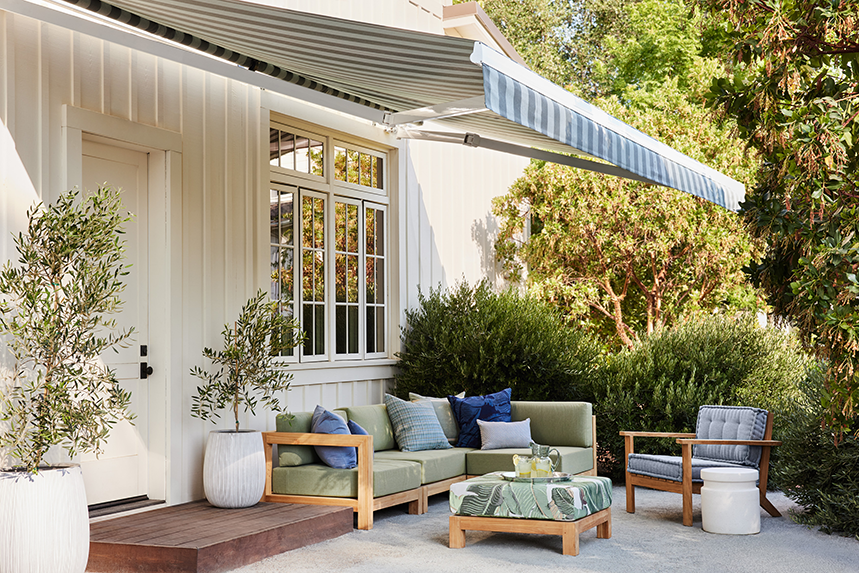
Your Palm Harbor patio sits empty again. It is 2:47 PM on a Tuesday in June, and the afternoon sun has turned your beautiful outdoor living space into a 115°F heat trap. That expensive patio furniture? Fading. Those afternoon barbecue plans with the neighbors from Lansbrook? Moved indoors. The peaceful morning coffee routine overlooking Sutherland Bayou? Cut short by 9:30 AM when the sun crests your roofline.
This is the reality for thousands of homeowners in Palm Harbor, where Gulf Coast sun exposure renders patios unusable for more than half the year. Unlike interior shade solutions that address windows only, retractable patio awnings reclaim your entire outdoor living space—transforming your Mediterranean revival courtyard, coastal contemporary deck, or Florida ranch lanai into comfortable square footage you can actually use.
Why Palm Harbor Patios Demand Specialized Sun Protection
The Gulf Coast Heat Challenge
Palm Harbor receives an average of 246 sunny days annually, compared to the U.S. average of 205 (Source: National Oceanic and Atmospheric Administration, 2023). Between April and October, afternoon temperatures regularly exceed 90°F, with the UV index frequently reaching 10-11 on the EPA scale—classified as “very high” exposure risk (Source: U.S. Environmental Protection Agency UV Index Scale, 2024). For homeowners near Wall Springs Park or along the Tarpon Springs border, the combination of direct sun and reflected heat from water creates conditions that make uncovered patios genuinely uncomfortable by mid-morning.
Your Home’s Architecture Matters
Palm Harbor’s housing stock presents unique awning installation considerations. The area’s dominant Mediterranean revival homes often feature tile roofs and stucco walls requiring specialized mounting hardware. Coastal contemporary builds in developments like East Lake Woodlands typically have aluminum fascia boards that need reinforced attachment points. Florida ranch homes—prevalent throughout established Palm Harbor neighborhoods—offer the most straightforward installations, with generous eave overhangs that complement retractable systems beautifully.
Understanding your home’s structure determines whether your awning mounts to the wall, soffit, or roof—and which mounting method will provide decades of reliable performance against our coastal weather conditions.
How Retractable Awning Systems Outperform Fixed Alternatives
Control That Matches Your Lifestyle
Fixed patio covers block light permanently. Pergolas create partial shade patterns that shift throughout the day. Retractable shade systems Pinellas homeowners increasingly choose offer something neither alternative can: complete control over your environment.
- Morning flexibility—Retract fully to enjoy early sunshine with your coffee before the heat intensifies
- Midday protection—Extend to full coverage when UV exposure peaks between 10 AM and 4 PM
- Evening ambiance—Partially extend for filtered sunset light during dinner on the patio
- Storm preparation—Retract completely when tropical weather approaches, eliminating wind damage risk
Energy Savings That Offset Your Investment
When your Duke Energy Florida bill arrives in August, you feel the cost of cooling a sun-baked home. Properly positioned outdoor awnings Palm Harbor installations reduce solar heat gain through adjacent windows and doors by up to 65% (Source: Professional Awning Manufacturers Association, 2022). The U.S. Department of Energy reports that window awnings can reduce cooling energy use by 26% in hot climates (Source: U.S. Department of Energy, Energy Saver Guide, 2023).
For a typical Palm Harbor home running air conditioning 8+ months annually, that translates to meaningful monthly savings that compound year after year.
Selecting the Right Retractable Awning for Coastal Florida
Fabric Performance in Salt Air Conditions
Not all awning fabrics survive coastal Florida conditions. Proximity to Sutherland Bayou and Gulf waters means your awning fabric encounters salt-laden air, intense UV bombardment, and humidity levels that promote mildew growth. Premium solution-dyed acrylic fabrics—where color penetrates the entire fiber rather than coating the surface—maintain appearance and structural integrity far longer than cheaper alternatives.
| Fabric Type | UV Resistance | Salt Air Durability | Expected Lifespan |
|---|---|---|---|
| Solution-Dyed Acrylic | Excellent (95%+ UV block) | Excellent | 10-15 years |
| Polyester | Good (80-90% UV block) | Moderate | 5-8 years |
| Vinyl/PVC | Moderate (70-85% UV block) | Good | 7-10 years |
| Canvas (untreated) | Poor (50-70% UV block) | Poor | 3-5 years |
Motorized vs. Manual Operation
Your lifestyle determines which operation style serves you best. Manual crank systems cost less upfront and have fewer components that could fail. Motorized systems—especially those with sun and wind sensors—provide effortless daily use and automatic retraction during sudden summer storms common to the Tampa Bay region.
For homeowners who plan to use their patio sun protection Tampa Bay investment daily, the convenience of motorized operation typically justifies the additional cost within the first season of use.
Frame Construction for Hurricane Country
Palm Harbor sits in a hurricane-prone region. Your retractable awning frame must withstand not just daily weather but the occasional tropical system that sweeps through. Powder-coated aluminum frames resist corrosion from salt air while providing the strength-to-weight ratio necessary for large span coverage. Stainless steel hardware at all connection points prevents the rust failures common in lesser systems after 3-5 years of coastal exposure.
What Your Retractable Awning Installation Involves
Professional Site Assessment
Before any installation begins, a thorough evaluation of your specific property determines the optimal approach. This assessment examines your home’s construction materials, measures sun angles at different times of day, evaluates wind exposure patterns, and identifies the mounting configuration that will provide maximum coverage for your outdoor living area. For homes near Palm Harbor Golf Club or in East Lake Woodlands, wind exposure from open terrain often requires additional bracing considerations.
Installation Timeline and Process
Most residential retractable awning installations in Palm Harbor complete in a single day. The process follows a consistent sequence:
- Structural preparation—Installing mounting brackets with appropriate hardware for your home’s construction (typically 1-2 hours)
- Frame assembly—Connecting arm mechanisms and mounting the main housing unit (1-2 hours)
- Fabric attachment—Securing the awning fabric to the roller tube and tensioning properly (30-60 minutes)
- Motorization—Wiring motorized systems and programming controls/sensors (1-2 hours if applicable)
- Testing and adjustment—Verifying smooth operation and making final pitch adjustments (30 minutes)
You can typically use your new retractable patio awnings Palm Harbor system the same afternoon installation completes.
“Homeowners consistently underestimate how much their outdoor living habits change after awning installation. Patios that sat empty from April through October become daily-use spaces overnight.”
Maintaining Your Investment in Florida’s Climate
Seasonal Care Requirements
Your retractable awning requires minimal maintenance to deliver years of reliable service, but Florida’s climate demands attention to a few specific care practices:
- Monthly cleaning—Brush off debris and rinse with clean water to prevent mildew formation in our humid climate
- Quarterly inspection—Check arm mechanisms for smooth operation and lubricate pivot points
- Pre-storm retraction—Always retract fully when sustained winds above 25 mph are forecast
- Annual professional check—Have motor systems and fabric tension evaluated before peak summer season
Warranty Considerations for Coastal Installations
Premium retractable awning manufacturers typically offer 5-10 year frame warranties and 5-year fabric warranties. However, warranty terms often contain specific maintenance requirements—particularly regarding cleaning frequency and storm retraction protocols. Understanding these requirements before purchase protects your investment and ensures you can make valid warranty claims if issues arise.
Transform Your Outdoor Living This Season
Your Palm Harbor patio represents valuable living space—square footage you have already paid for but cannot comfortably use for more than half the year. Retractable patio awnings change that equation completely, giving you control over your outdoor environment regardless of what the Gulf Coast sun delivers.
Whether your home overlooks Sutherland Bayou, sits in the established neighborhoods near Wall Springs Park, or occupies a lot in the planned communities of Lansbrook or East Lake Woodlands, a properly designed retractable awning system transforms your relationship with outdoor living.
Schedule your free patio shade assessment today. We will evaluate your specific property, discuss your outdoor living goals, and provide a detailed proposal for reclaiming your patio from the Florida sun. No pressure, no obligation—just honest answers about what will work best for your home and your budget.
Frequently Asked Questions
How do retractable awnings handle Florida’s sudden afternoon thunderstorms?
Quality motorized systems include wind sensors that automatically retract the awning when wind speeds exceed a preset threshold, typically 20-25 mph. This automatic protection activates even when you are away from home, preventing fabric damage from sudden storms common during Tampa Bay’s summer rainy season. Manual systems require you to monitor weather conditions and retract before storms arrive.
What size retractable awning do I need to shade my entire patio?
Retractable awnings project outward 5 to 14 feet from the mounting point, with widths ranging from 8 to 40 feet depending on the model and configuration. For complete patio coverage, measure your outdoor space and add 2 feet to each dimension to account for sun angle changes throughout the day. Most Palm Harbor installations range from 12×10 feet for smaller patios to 20×12 feet for larger outdoor living areas.
Can retractable awnings be installed on homes with tile roofs common in Palm Harbor?
Yes, but tile roof installations require specialized mounting approaches. Rather than attaching directly to tiles, installers typically mount to the wall below the roofline or use standoff brackets that attach to the underlying roof structure. This preserves your tile roof’s integrity while providing secure attachment points rated for coastal wind loads.
How long does a retractable awning typically last in Florida’s harsh sun and humidity?
With proper maintenance and quality components, retractable awnings in coastal Florida typically last 12-20 years for the frame and mechanical components, and 8-12 years for premium solution-dyed acrylic fabrics before replacement becomes necessary. Cheaper polyester fabrics may require replacement in 5-7 years due to UV degradation and mildew issues in our humid climate.